
Sharp Knives for Sweet Wine:
The Tubâ Harvesters of Northern Negros
Words by Rae Macapagal
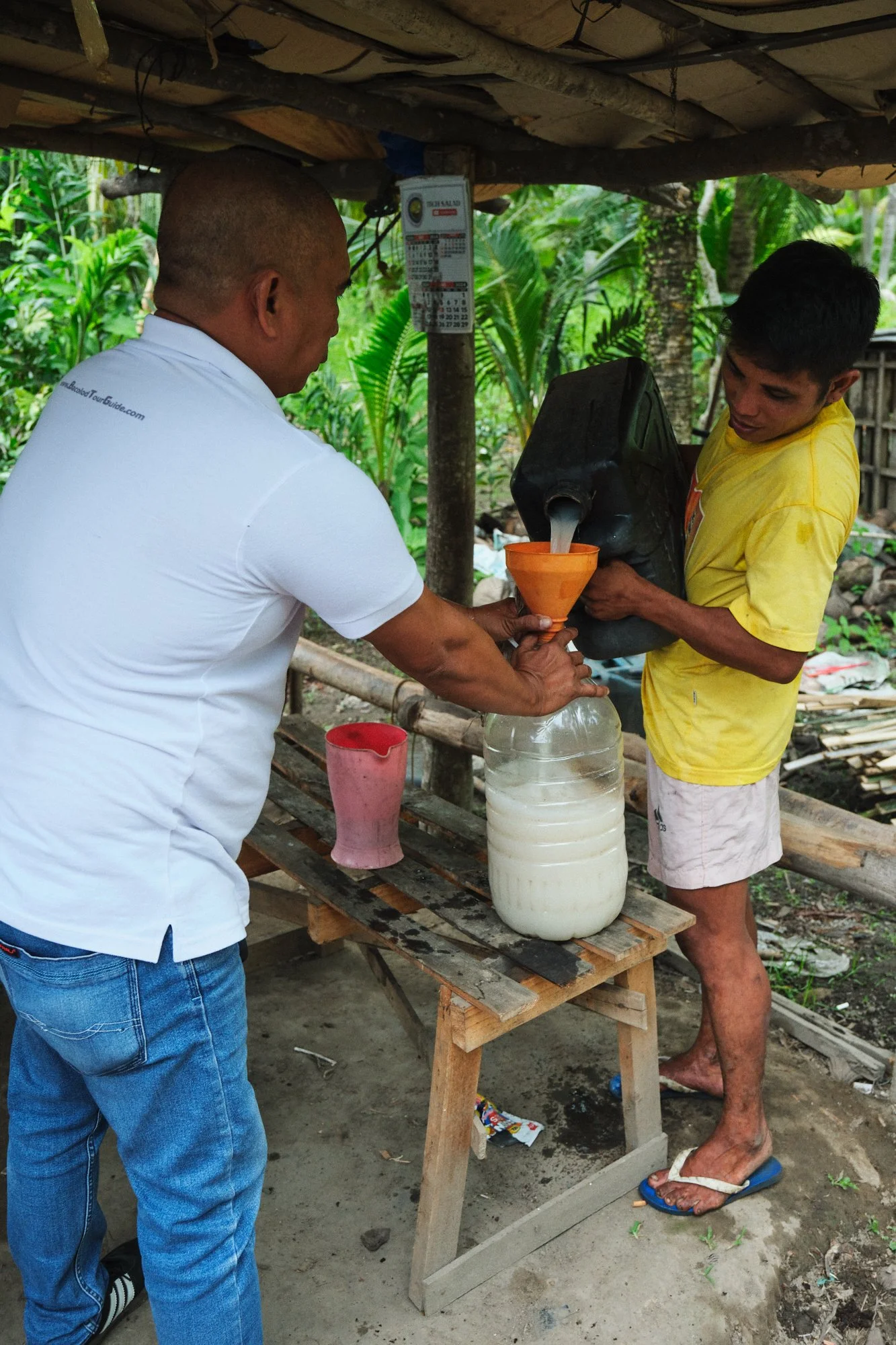
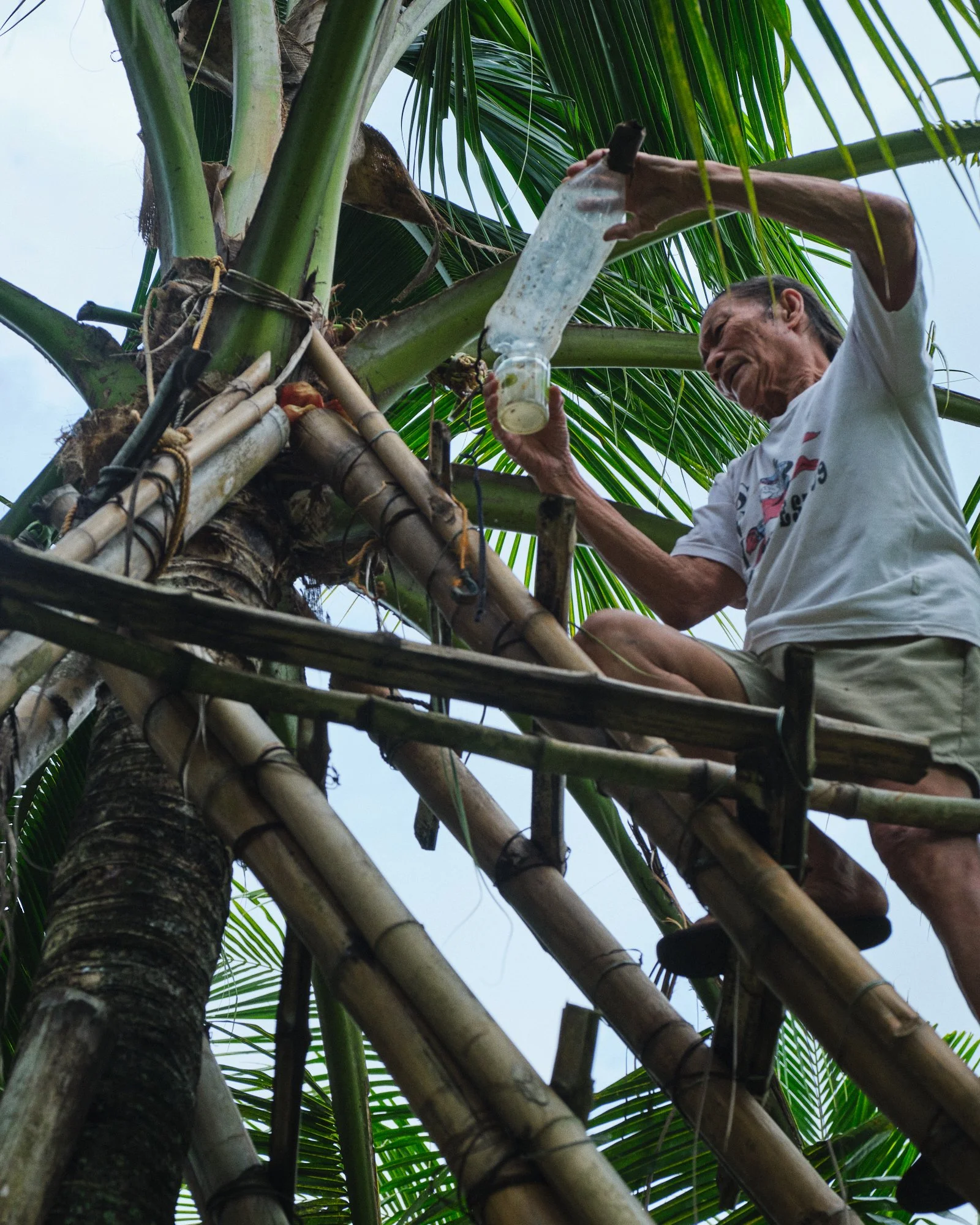
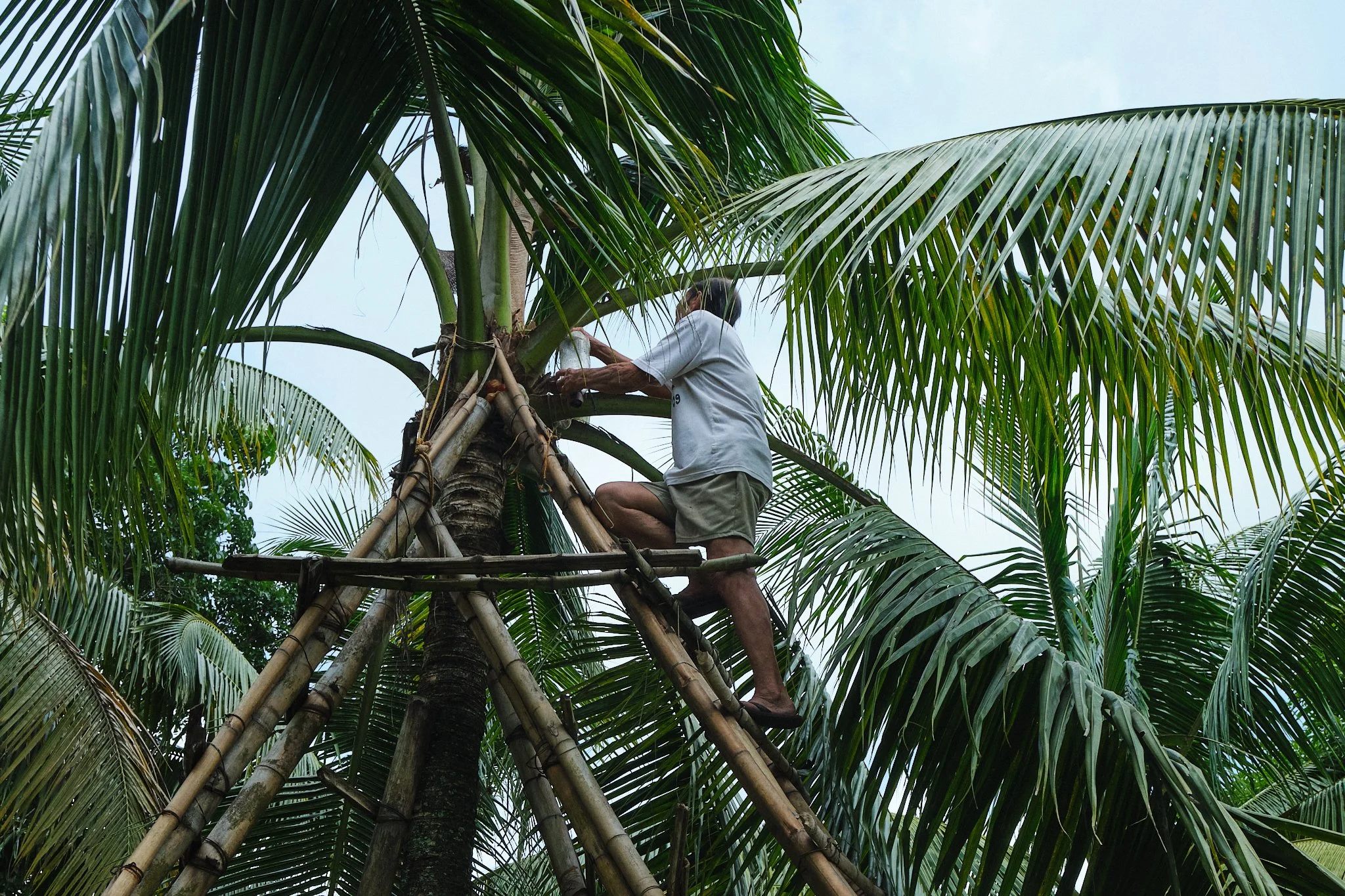
Coconut trees do not easily give out their intoxicating elixir. We need the skills of the mananggiti, farmer-artisans who coax out the sweet sap from these tropical palms. The process starts with the grooming of the flower spike. When this emerges, the mananggiti binds it and anchors the stem toward the trunk in order for it to curve downwards over several weeks. Once the desired angle is achieved, the mananggiti sharpens his sanggot (a thin, curved blade) very well to make the crucial first slice. He cannot hesitate with his strokes, lest the tiny tubules in the stem get crushed, preventing the free flow of sap. In a couple of hours, the tree microbes ferment it into tubâ. However, its transient sweetness gives way to a mild acidity, as Acetobacters vinegarize the tubâ.

We spoke with Mr. Carlos de Asis, whose coconut grove is located in the center of Sagay City. In between shots of frothy tubâ, he talked about how he quickly learned the craft as a post-retirement hobby. And that, while he hopes this practice will continue, he fears that the vagaries of climate change may bring the devastating CocoLisap bugs to kill his trees. He further laments the younger generation’s disinterest in this traditional drink. The youth prefer stronger alcohols like brandy or rhum, and feel that tubâ is only for the elderly. Or perhaps they are no longer interested in the bounty of nature.“I also try to teach my grandsons how to do all this. But they are too busy with their cellphones,” he explains with resignation. As such, the tubâ from his trees are mostly just left in containers to turn into a tasty vinegar, which he gives to his relatives who travel from faraway cities to ask for a bottle or two of this naturally fermented langgaw. Whether used plain or spiced with peppercorns and galangal, this coconut vinegar is considered a cornerstone of Philippine cuisine