Sapal: A Boozy Rice Cake in a Healing Leaf
Words by Rae Macapagal
Leaving the Old World comforts of Silay, we venture onto rugged Antique, and join Senator Loren and Congressman AA Legarda’s efforts at safeguarding the gastronomic heritage of this province. Our first trip is to the inland town of Sibalom, whose insignia boasts the Rafflesia speciosa, an endemic corpse lily discovered by scientists only in 2002. The protected forest on its eastern flank also hosts a medicinal leaf that is a key ingredient in the making of sapal, a unique fermented rice cake.
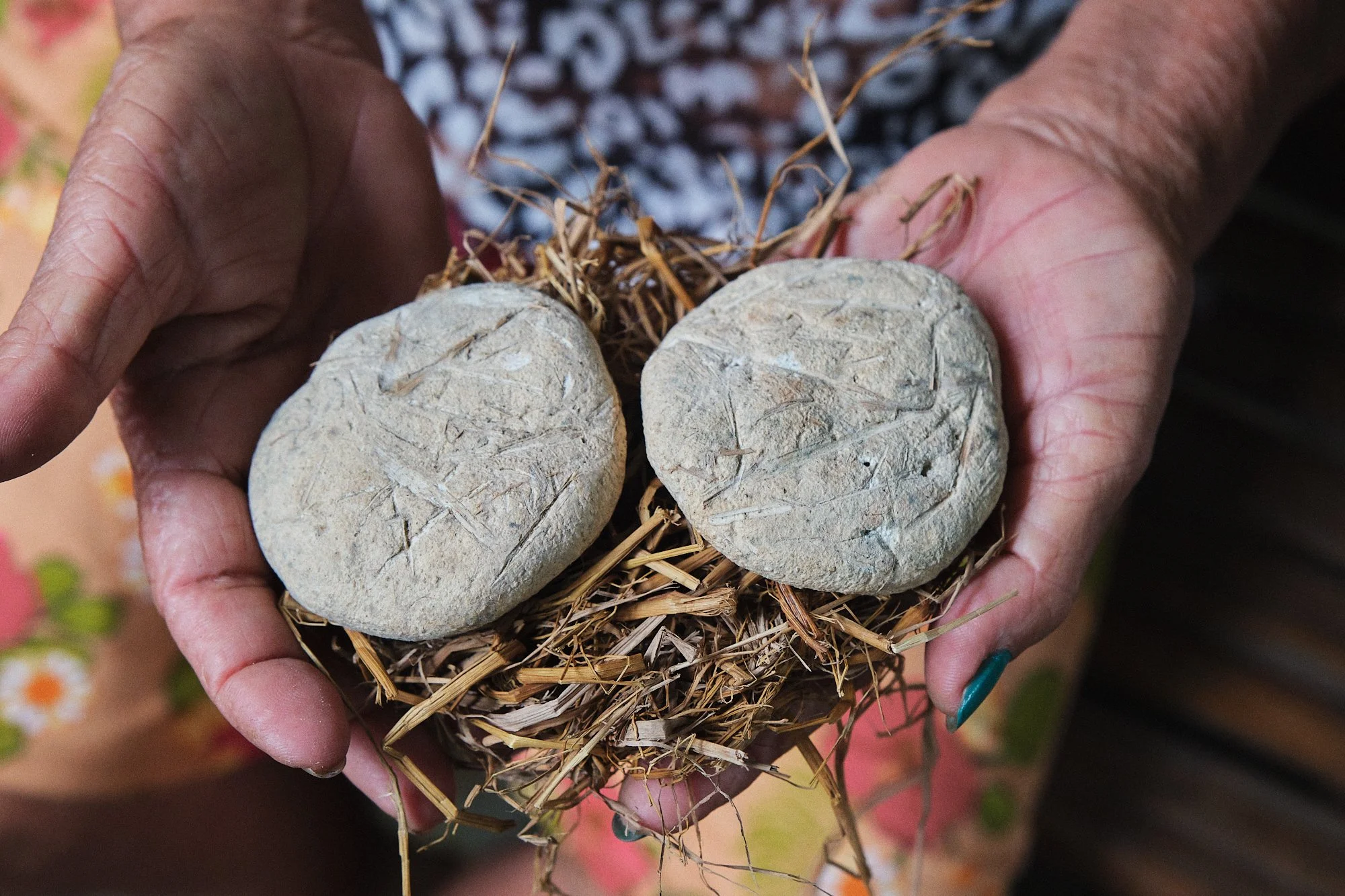
Together with tourism officers of the municipality, we headed toward Barangay Lacaron, where we found septuagenarian Nanay Lydia Mustacho doing laundry while smoking rolled nipa leaves. She wasn’t expecting us, and had no sapal available. She had stopped making it as the debilitating heat of the past summer thoroughly weakened her. With a bit of charm and cajoling, she warmed up to her surprise visitors and brought out her basket filled with rice straw and tapay. These off-white patties are yeast starters that she made by pounding old rice with chili, ginger, and peppercorns. After many minutes of conversation, photo-taking, and even begging, she agreed to make a small batch for us. We had to give gas money so that someone can travel into the forest to gather the all-important medicinal leaf wrapper – the talǝs.
The following morning, she had over thirty small parcels ready for us. This rice cake, made from old rice from last year’s harvest, was sprinkled with the tapay, wrapped in the healing heart-shaped leaves, and left in a closed container to ferment. After one consumes the uniquely mushy rice cake, the leaf-wrapper is wiped onto aching joints and muscles. Nanay Lydia transferred it from her bucket to our clear carrying case.
While we were told to wait a few more hours for optimum fermentation, we were already treated to the first juices of this snack that trickled to the bottom of Nanay Lydia’s bucket. It was intensely sweet, with a boozy whisper that promised to intensify in the coming days.