Traditional Javanese Tempeh
Words by Alexander Pomper
Tucked away to the south of Yogyakarta lies Tempe Cah Dampit, the last traditional tempeh maker in the Palbapang area. With no online presence and open only by appointment, this place is a true treasure for those wanting an old-world Javanese experience.


Bu Sisil, a third-generation tempeh artisan, showed us the intricate, heirloom technique her family uses to create Usar- the natural inoculant needed to ferment tempeh.
The process involves growing Rhizopus spp. mold on leaves of the waru (hibiscus) or teak tree.
Here's how it works:
1. A tablespoon of inoculated tempeh is sandwiched between banana leaves and waru or teak leaves.
2. It's left to ferment at room temperature for about 36 hours (depending on the season), forming the Usar.
3. The Usar is then rubbed onto cooked soybeans to begin fermentation, acting as the starter culture.
Their famous tempeh is created using a similar process:
Soybeans are first soaked for 10-12 hours (depending on desired crunchiness), and then boiled.
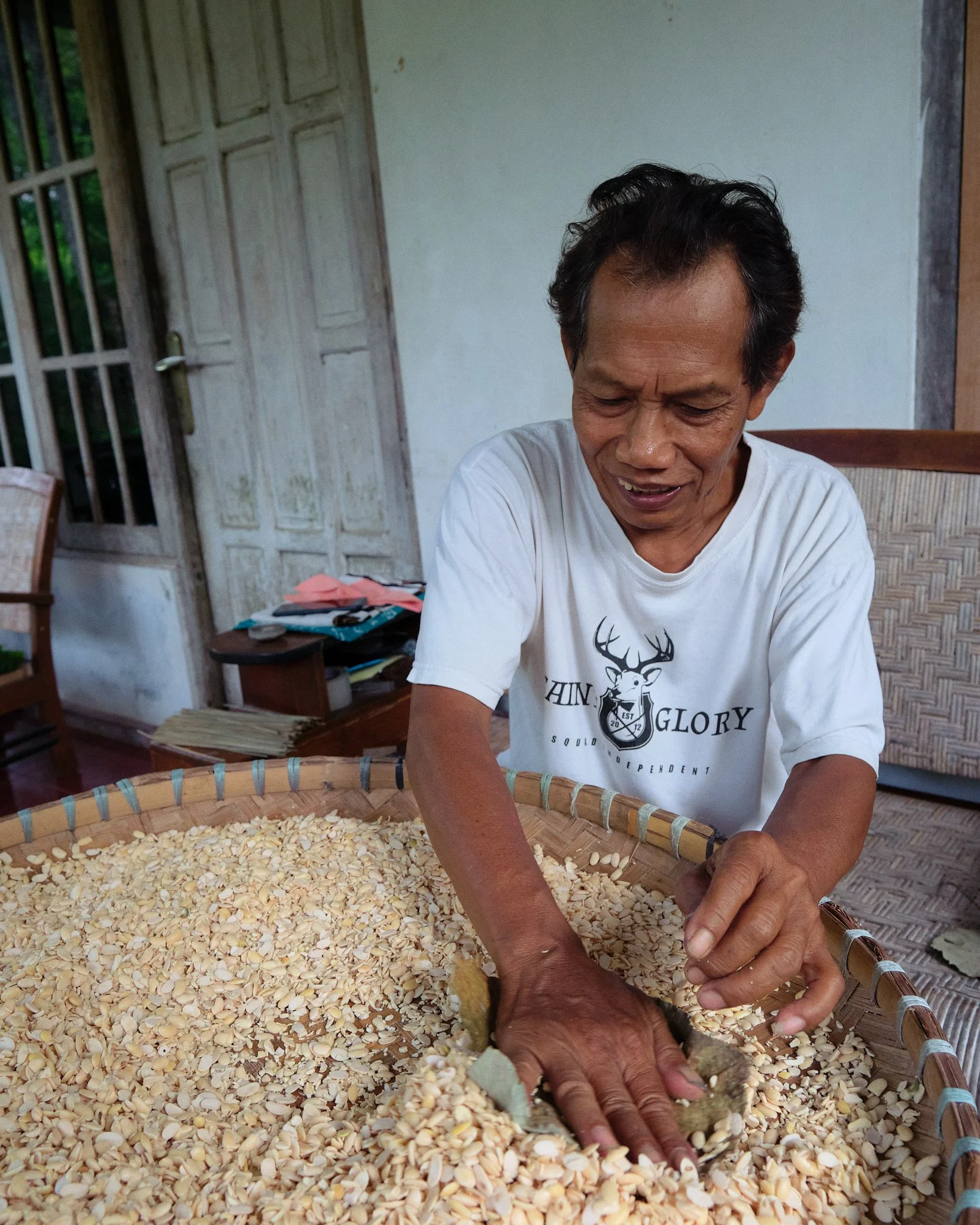
Pak Gun rubs the inoculated waru leaves all over the beans to transfer yeast onto the new batch of tempeh.
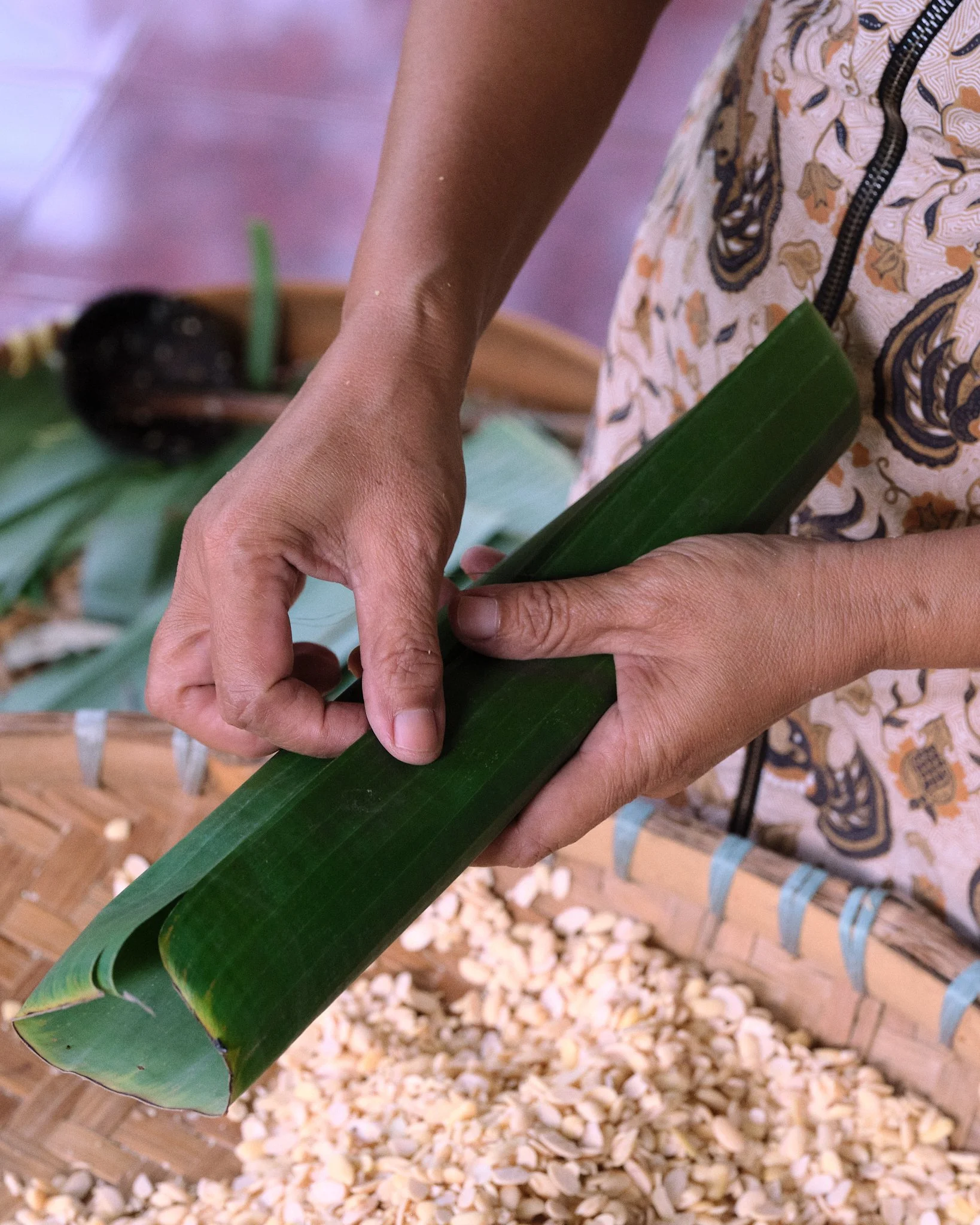
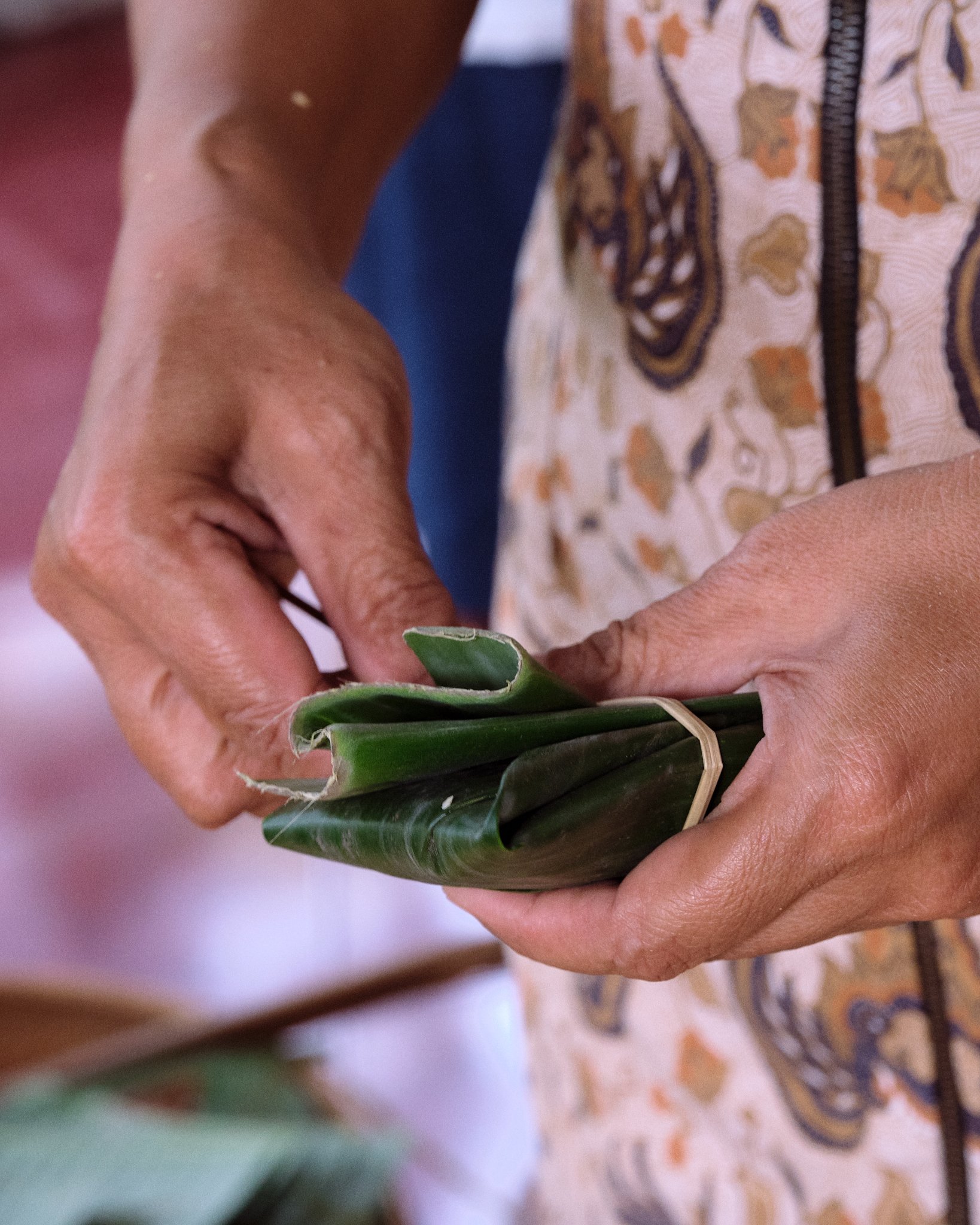
Using an antique bicycle bell for her measuring cup, Bu Sisil prepares banana leaf packets of the rubbed soya beans. The packets contain a small slit to allow for airflow, the secret to maintaining a constant temperature in Central Java’s warm climate.
The packets are left to sit in a dark basket for 24-72 hours,


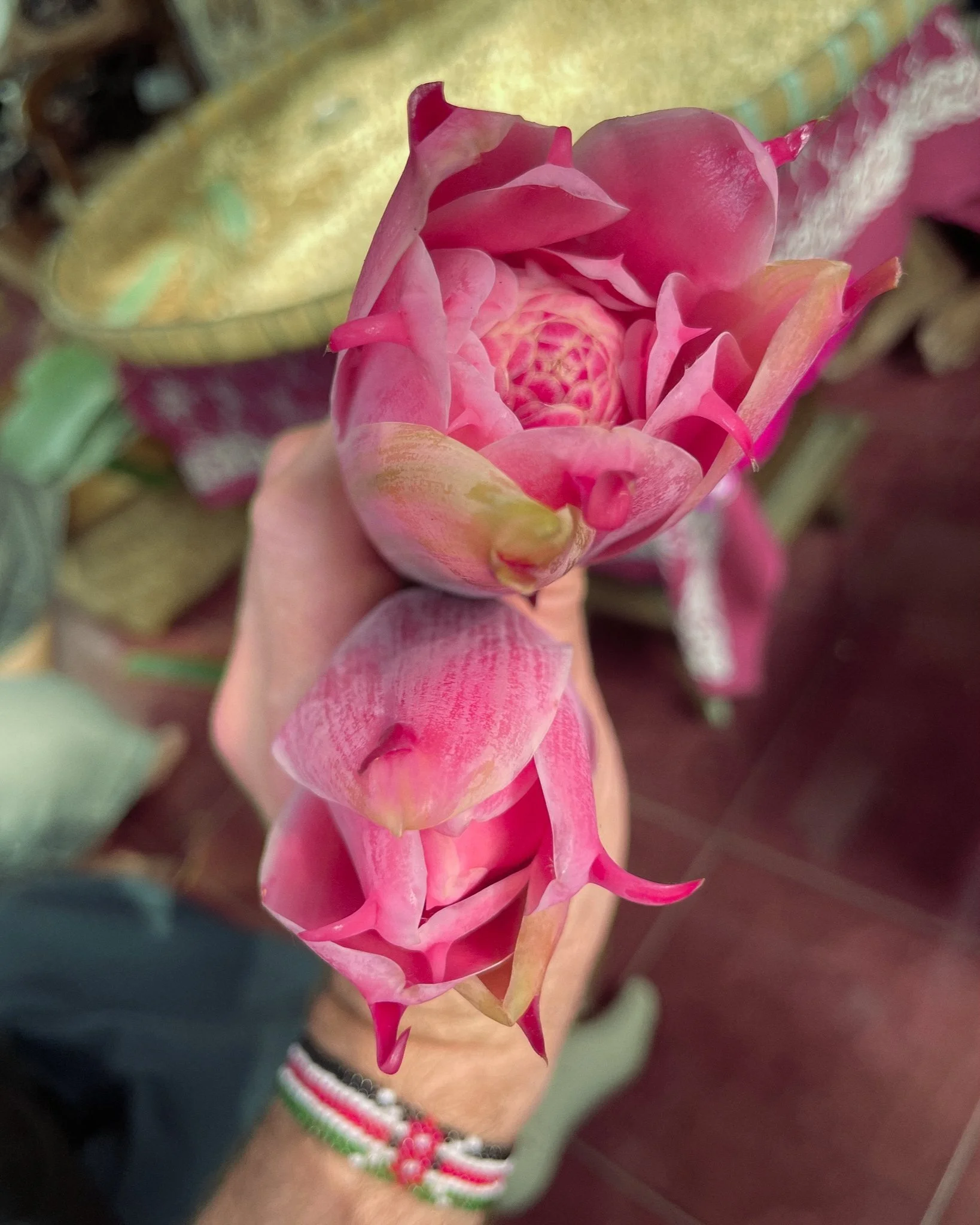
Tempe Cah Dampit's creations are unique- they make tempeh from peanuts, mung beans, velvet beans, jack beans, and even a variety of ancient heirloom black soybeans. On our visit, Bu Sisil was crafting a batch with torch ginger flower, only available by special order.



The experience at Tempe Cah Dampit gave me a deeper appreciation for the cultural significance of traditionally produced tempeh, a cherished ingredient deeply intertwined with tradition and spirituality.
As my guide, Amaliah, beautifully put it: “Tempeh is how Javanese people play with natural life. They pour love and soul into each batch, singing in prayers as part of the process.”