
The Return of a Beloved Delicacy Signals Hope for Coastal Negros Communities
Words by Rae Macapagal
At the markets of Northern Negros, a much-desired molluscan delicacy returns. Among the wide lapad rhum bottles of orange dayok and grey ginamos-dilis reappears the creamy white ginamos nga batitis. This is the brine-fermented meat of the batitis (Batissa violacea), a dark-brown clam with a deep purple nacre. Once commonly eaten as a side dish whose saltiness was tempered with tuba vinegar or calamansi, this clam vanished from the beaches for several years. Pollution coming from upriver, as well as infrastructure projects, are said to have caused this disappearance.

Zenaida Tabingo was able to put her two kids through college with her batitis business, until contaminated water killed the area’s shellfish stock.

With the help of the Sagay City Tourism Office, we ventured into Barangay Himogaan Baybay, a village set amidst the nipa-filled estuary of the Himogaan River. There we met Elvie Nollia, who was rinsing off a basin of clam meat that she had shucked with her family. We asked if it was batitis. Her answer revealed a deeper side of the story. According to her, it was not batitis but balinday. However, most people sell it as batitis. The real batitis has pure white meat, while balinday has a noticeable dark liver spot. True enough, we found such “batitis” during our visit to the nearby Cadiz City Market. We had, however, seen the pure white batitis at the Victorias City Market a few days before.
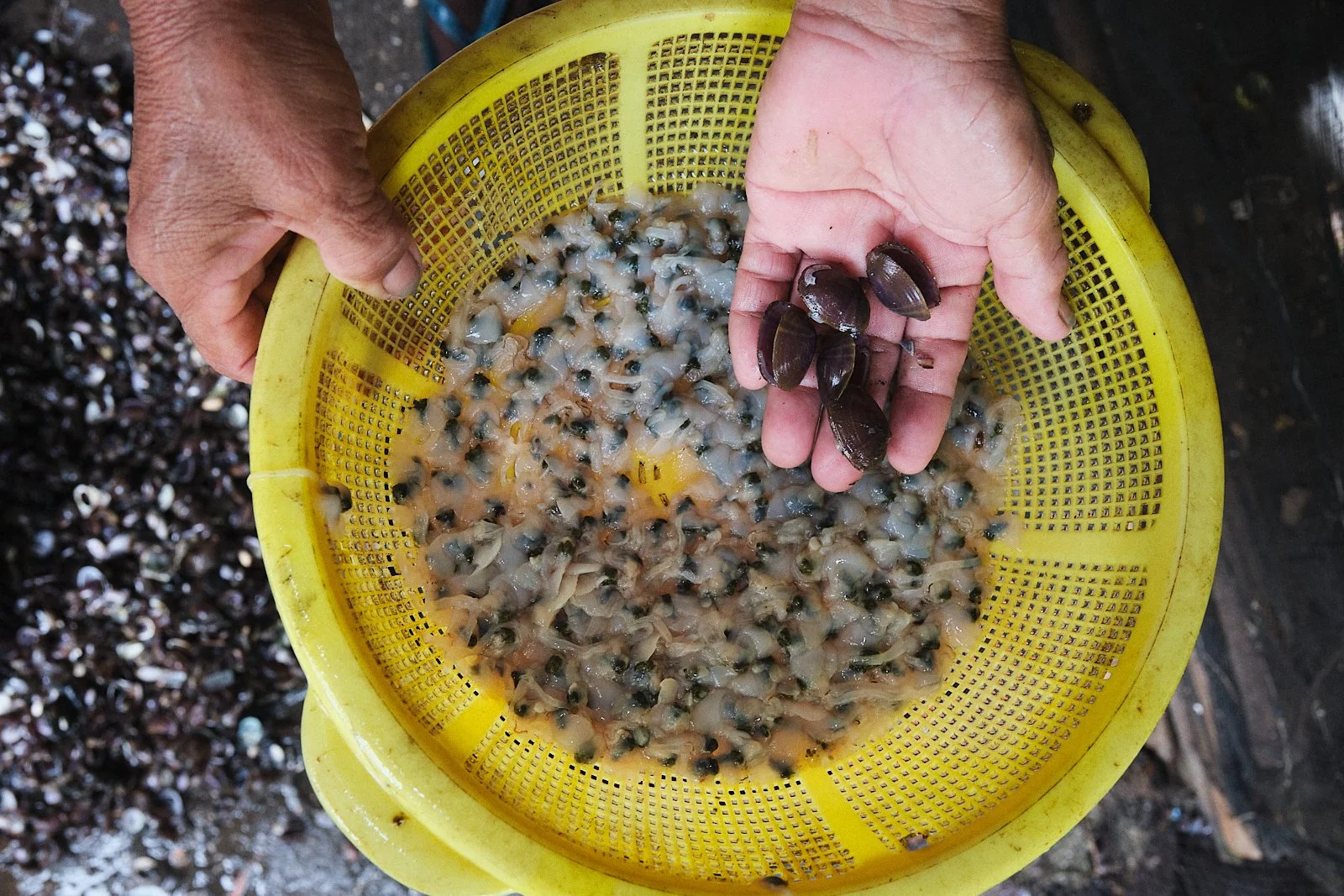
The reappearance of the batitis clams seems to be a sign that efforts to clean up the coastal areas of Northern Negros have borne fruit. However, local residents are still wary, as they know that their shores will once again be sullied when the sugar mills upriver dump their effluents onto the waterway. This time, for how long will we be able to savor the briny creaminess of batitis?

